What Cairns Homeowners Should Know Before Installing a New Air Conditioner
Thinking about installing a new air conditioner? Here are some things you should know before purchasing a new ac unit!
Air conditioning is not a luxury in Far North Queensland. Between the wet season humidity that settles in for months at a time and the dry season afternoons that still push well past comfortable, a properly working AC system is part of what makes living in the tropics genuinely enjoyable rather than something you endure. Yet plenty of Cairns homeowners end up with installations that disappoint within a year or two. The unit might be the wrong size, mounted in a spot that blasts cold air across the bed, or chosen without any thought to the specific challenges of running an air conditioner in a coastal tropical climate.
Getting the installation right the first time saves years of frustration and thousands of dollars in running costs. The decisions that matter most are not actually about which brand is on sale at the big box retailer. They are about sizing, placement, climate suitability, and the installer who is going to be standing behind the work.
Sizing the System Properly for Tropical Conditions
The single most common mistake in residential air conditioning is installing a unit that is the wrong size for the space. Bigger is not better. An oversized system cools the air quickly, then shuts off before it has had a chance to remove humidity. In Cairns, that matters enormously. The room feels cold and clammy at the same time, which is the worst of both worlds. An undersized unit, on the other hand, runs constantly without ever reaching the set temperature, sending your electricity bill into orbit.
Proper sizing depends on more than the square footage of the room. Ceiling height, window orientation, insulation quality, the number of people who use the space, and the local climate zone all factor into the calculation. North-facing rooms in Cairns take a heat hit that a south-facing room of identical size simply does not. A competent installer should walk through your home, take measurements, and consider how each room is used before recommending a unit. If a quote arrives without anyone having set foot in the property, treat it with caution.
Choosing Between Split Systems, Multi-Splits, and Ducted
For a single room or open-plan area, a wall-mounted split system is usually the most cost-effective choice. A multi-split system allows several indoor units to run from one outdoor condenser, which is useful in Queenslander-style homes where running multiple condensers around the verandah is visually unappealing.
Ducted air conditioning distributes cooled air through ceiling vents from a central unit in the roof space. It is more expensive to install and is best considered during a renovation or new build, when ductwork can be integrated without tearing up finished ceilings. Ducted systems offer cleaner aesthetics and zoned cooling, but in Cairns roof spaces that regularly exceed 60 degrees in summer, the equipment has to be specified carefully to handle the heat it operates in.
Working with an Installer Who Knows the Local Climate
The climate in Far North Queensland places demands on air conditioning systems that drier or cooler parts of Australia simply do not. Salt air from the coast accelerates corrosion on outdoor units, the wet season delivers months of high humidity that taxes drainage and creates ideal conditions for mould growth inside indoor units, and tropical wildlife creates problems that surprise plenty of homeowners.
Local installers who handle air conditioner installation in Cairns will typically recommend specific brands like Mitsubishi, Daikin, Fujitsu, or Panasonic because these units offer better internal protection against issues that are uniquely common in tropical Queensland. One of those issues is geckos getting inside outdoor units and shorting out the printed circuit boards, a problem that can result in repair bills running into the thousands. A locally experienced installer factors these realities into their recommendations and their installation methods in ways a generalist contractor from down south simply will not. They also know the Cairns Regional Council requirements for outdoor unit placement, the realities of installing on raised Queenslander homes, and which suburbs have the salt exposure issues that demand a more corrosion-resistant unit.
A good installer will also be properly licensed under both electrical and refrigerant handling regulations. In Australia, anyone working with refrigerant gases must hold a current Refrigerant Handling Licence from the Australian Refrigeration Council. Hiring an unlicensed installer is not just a quality risk, it is illegal, and it almost always voids the manufacturer’s warranty.
Placement Matters More Than People Realize
Where the indoor unit goes within a room affects how evenly the space cools and how quiet the system feels day to day. Mounting it above a bed or sofa often leads to complaints about cold air blowing directly on people, which leads to higher thermostat settings, which defeats the purpose. A good installer will discuss airflow direction and recommend a position that distributes air across the room rather than dumping it on the occupants.
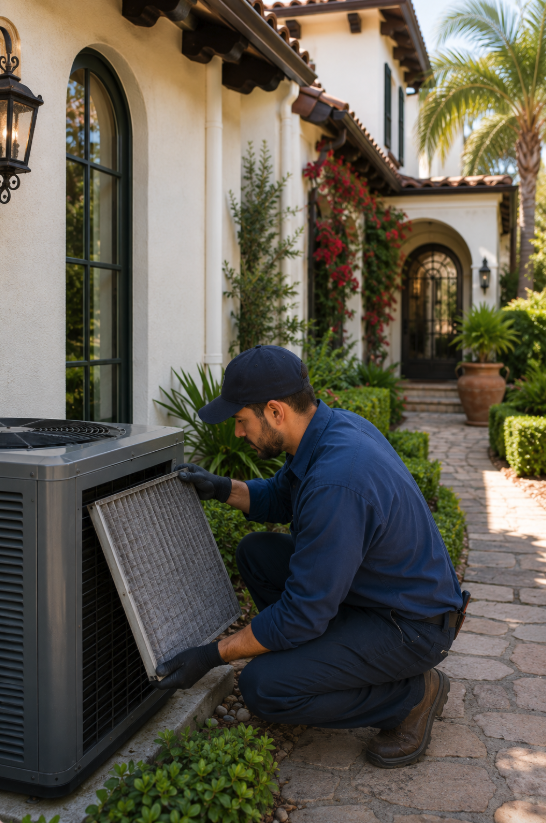
The outdoor condenser is even more important in Cairns. It needs adequate clearance for airflow, should never sit in direct afternoon sun if it can be avoided, and must be positioned away from bedroom windows because of noise. Coastal homes benefit from mounting condensers in positions that are shielded from the worst of the salt-laden breezes. Drainage from the unit also has to go somewhere sensible, not onto a path where it will create a slip hazard or against a timber wall where it will rot the cladding within a couple of wet seasons.
Energy Efficiency and Running Costs
The upfront price of a unit is only part of the total cost of ownership. In tropical Queensland, where air conditioning often runs for the better part of the year, running costs over a decade can easily exceed the purchase price of the equipment. That makes the energy rating of the system matter far more than most buyers initially appreciate.
The Australian Government’s Energy Rating website provides star ratings and zoned energy efficiency information specifically tailored to Australian conditions, with separate ratings for hot, mixed, and cold climate zones. For Cairns buyers, the hot zone rating is the figure that matters, and the difference between a three-star and a six-star unit running ten hours a day for half the year is not trivial. Over a decade, the gap easily reaches into the thousands of dollars in electricity costs.
Inverter technology, now standard on most quality residential units, allows the compressor to ramp up and down rather than cycling fully on and off. This produces more stable temperatures, quieter operation, and significantly lower electricity use. If a quote includes a non-inverter unit at a tempting price, the savings will likely disappear in the first two or three years of operating costs.
Maintenance Considerations in the Tropics
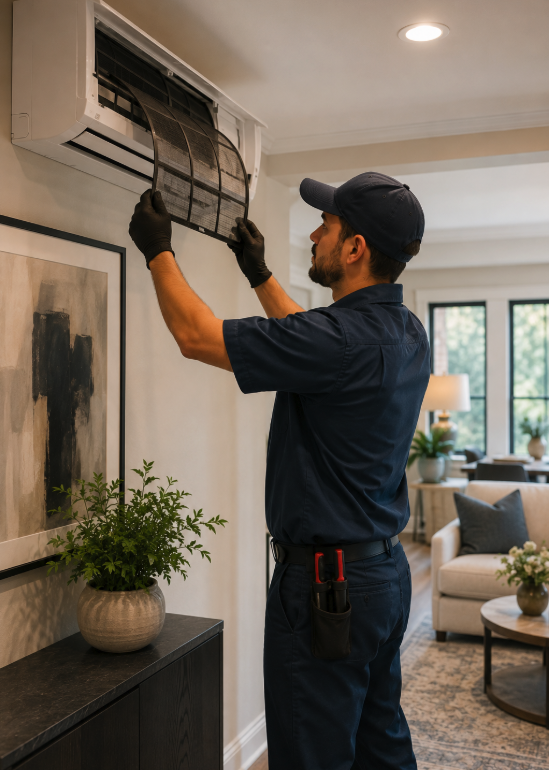
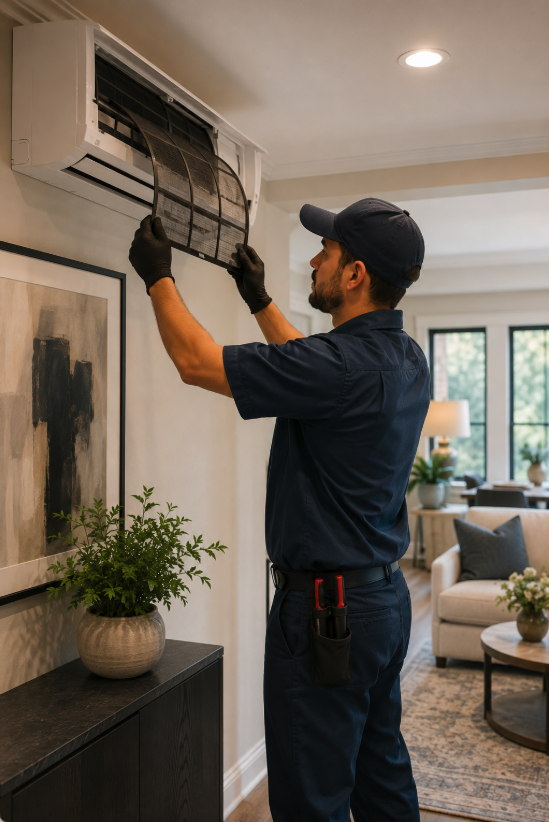
A new air conditioner needs regular service to stay efficient, and that goes double in the tropics. For most domestic units in Cairns, an annual service is the minimum, and some homes benefit from servicing every six months given the humidity load. Filters should be cleaned every few months at minimum, and indoor coils benefit from periodic deep cleaning to prevent the mould and bacterial growth that high humidity makes inevitable in neglected systems.
A musty smell when the AC starts up is the first warning sign, and it is also one that gets worse if left alone. Acting on it early saves the cost of a major clean down the track, and protects the indoor air quality of the home in the meantime.
Getting the Right Quotes
When comparing quotes, look at what is actually included. Some show only the unit price and leave installation as an extra. Others bundle installation but exclude electrical work, mounting hardware, or removal of an old system. A clear, itemised quote that spells out the brand, model, capacity, warranty terms, and total installed price is the only kind worth comparing.
The cheapest quote is rarely the best value. The most expensive one is not automatically better either. The right choice usually sits in the middle, with a contractor who explains their reasoning, takes measurements seriously, and treats your home as something they will be standing behind through many Cairns wet seasons to come.