Canvas vs. Framed Print: What’s Better for a Painting in Your Home?

Choosing artwork for your home is only half the decision. The other half — and the one people agonize over most — is how that artwork should be presented!
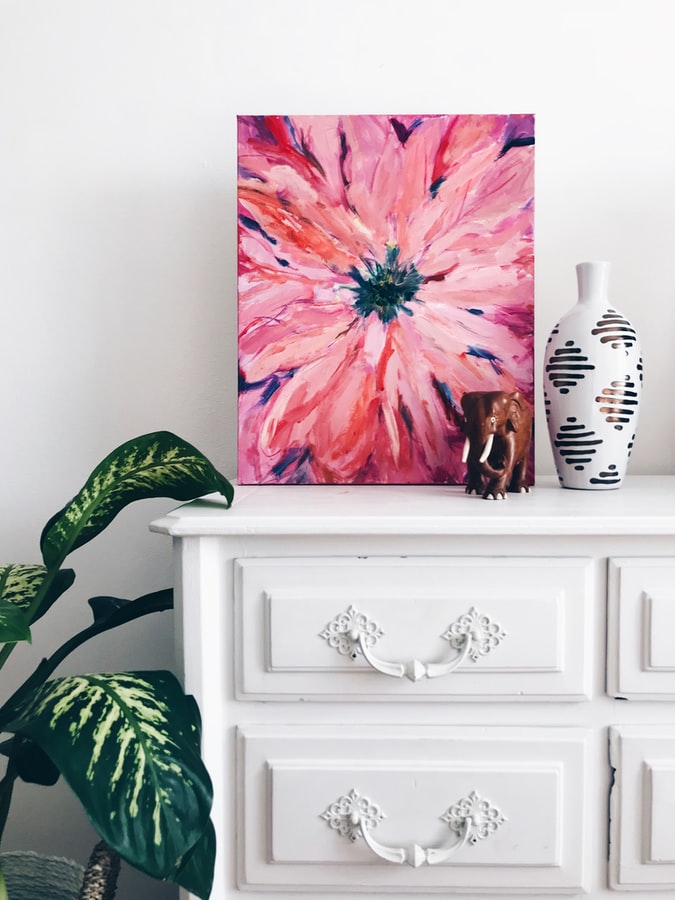
Should you go with a gallery-style stretched canvas, or a classic framed print behind Glass? Both have passionate fans, and both can look stunning in the right space. The honest answer is that neither is universally “better.” The right choice depends on your room, your style, your budget, and how you want the piece to feel on the wall.
In this guide, we break down the real differences between canvas and framed prints so you can decide with confidence.
What Is a Canvas Print?
A canvas print is artwork printed directly onto woven canvas fabric, then stretched over a wooden frame (called stretcher bars) and secured at the back. The result is a frameless, three-dimensional piece with a subtle fabric texture. Gallery-wrapped canvases extend the image around the edges, so the artwork looks finished from every angle without any framing.
Canvas prints are the go-to format for reproducing paintings because the woven texture mimics the surface of an original oil or acrylic work. When you hang a canvas reproduction of a painting, it reads as art — not as a poster.
What Is a Framed Print?
A framed print is artwork printed on paper — often fine art or archival paper — then matted, placed behind Glass or acrylic, and enclosed in a frame. Framed prints have a crisp, polished, traditional look. The frame itself becomes part of the design, letting you match your décor with materials like natural oak, matte black metal, or ornate gold.
Canvas vs. Framed Print: The Key Differences
1. Visual Style and Texture
Canvas delivers warmth and depth. The fabric weave softens the image slightly, giving reproductions of paintings an authentic, hand-crafted feel. It suits relaxed, modern, coastal, farmhouse, and Mediterranean-inspired interiors beautifully.
Framed prints deliver sharpness and formality. Fine details, crisp lines, and photographic images often look better on paper behind Glass. If your home leans classic, traditional, or gallery-wall eclectic, framing wins.
Verdict: For painterly artwork — landscapes, still lifes, abstracts — canvas usually captures the spirit of the original best. For photography, illustrations, and typography, framed prints tend to shine.
2. Glare and Lighting
This is the difference most people overlook. Glass reflects light, which means framed prints can produce glare in bright rooms, near windows, or under direct lighting. Canvas has a matte, non-reflective surface, so it looks consistent from every angle and at every time of day.
If you’re hanging art in a sun-drenched living room or above a mantel with spotlights, canvas is the low-glare choice. (Museum-grade non-reflective Glass solves this for framed pieces, but it adds high cost.)

3. Durability and Care
Canvas is lightweight and shatterproof — a real advantage in hallways, kids’ rooms, and rental homes. Quality canvases with UV-resistant inks resist fading for decades. Dust them gently with a dry cloth, and they’re good to go.
Framed prints offer their own protection: the Glass shields the paper from dust, moisture, and fingerprints. The trade-off is weight and fragility. Glass can break during moves, and heavier frames require sturdier wall anchors.
4. Cost
Canvas prints are generally more affordable than framed prints of the same size, because you’re not paying for Glass, matting, and frame materials. If you’re furnishing multiple rooms or creating a large statement piece on a budget, canvas stretches your dollars further. Framed prints cost more but bring a premium, finished aesthetic that many homeowners feel justifies the price.
5. Size and Placement
Large-scale art is where canvas dominates. A 40″ x 60″ canvas is light enough to hang safely almost anywhere, while a framed piece that size becomes heavy, expensive, and cumbersome. For gallery walls made of smaller pieces, framed prints offer cohesion — repeating frame styles ties an arrangement together.
Quick Answer: Which Should You Choose?
- Choose canvas if: you’re displaying a painting reproduction, want a modern frameless look, need to avoid glare, are decorating on a budget, or want oversized art.
- Choose a framed print if: you prefer a traditional or formal aesthetic, you’re building a gallery wall, the artwork is a photograph or detailed illustration, or you want glass protection in a humid space.
At Art & Olive Co, we believe the best format is the one that lets you fall in love with your walls. For painterly pieces — the olive groves, coastal scenes, and warm still lifes our customers adore — canvas brings out the texture and soul of the original work. For crisp botanical illustrations and vintage-style prints, a well-chosen frame elevates the whole room.
Whichever you choose, invest in quality: archival inks, solid stretcher bars or real-wood frames, and UV protection. Great art should look as good in ten years as it does the day you hang it.
Ready to find your next favorite piece? Explore different collections and bring home artwork made to be lived with.