Formosan Termites in New Orleans: What Homeowners Should Know Before Swarm Season

Learn when Formosan termites swarm in New Orleans, how to recognize warning signs, and what homeowners should know about inspections and treatment!
Every spring, residents of New Orleans may notice large numbers of winged insects gathering around outdoor lights, windows, and doorways. In some neighborhoods, these swarms can be particularly noticeable on warm, humid evenings.
Many of these insects are Formosan subterranean termites, an invasive species that has become one of Louisiana’s most significant structural pests.
Although swarming termites are easy to notice, the colonies responsible for damaging buildings usually operate out of sight. Workers may feed on wooden materials for extended periods before homeowners discover a problem.
Understanding the differences between termite swarms, established infestations, and ordinary household insect activity is essential for protecting residential property.
Why Formosan Termites Are a Particular Concern in New Orleans
Formosan subterranean termites were introduced to the continental United States from East Asia and became established in Gulf Coast port cities, including New Orleans.
They belong to the subterranean termite group, which generally obtains food from cellulose-containing materials and maintains conditions that allow workers to avoid drying out.
What distinguishes Formosan termites from many native subterranean species is their capacity to establish very large colonies.
According to the LSU AgCenter, mature colonies may contain millions of termites and can cause extensive structural damage when conditions are favorable.
Formosan termites can also establish above-ground carton nests when a reliable source of moisture is available. This behavior is important because some infestations can persist in elevated parts of a building rather than relying exclusively on connections to the soil.
That does not mean every building with moisture damage contains termites. It means persistent water intrusion can increase the importance of a thorough inspection.
When Does Termite Swarm Season Begin?
The LSU AgCenter reports that Formosan subterranean termite swarming in Louisiana can begin in April and continue through June, with substantial activity often occurring during May.
Swarmers generally emerge under favorable weather conditions, particularly during warm, humid evenings with relatively little wind.
Unlike the smaller worker termites responsible for feeding damage, swarmers have wings and are the reproductive members of the colony.
Their purpose is to disperse, mate, and potentially establish new colonies.
Outdoor lighting can attract large numbers of swarmers. Residents sometimes discover them around porch lights, illuminated windows, or indoor fixtures when insects find their way inside.
However, seeing winged termites does not automatically establish that a home has an active structural infestation.
The circumstances matter.
What Does It Mean When Termites Appear Indoors?
A few swarmers entering through an open window or damaged screen may have originated from a nearby outdoor colony.
A substantial swarm emerging from inside a building, on the other hand, is a stronger warning sign of an established infestation.
Large accumulations of discarded wings indoors can also justify investigation.
Homeowners should avoid making conclusions based on insect appearance alone because flying ants are sometimes mistaken for termites.
Termite swarmers typically have relatively straight antennae, a broad waist, and two pairs of wings of similar length. Winged ants usually have elbowed antennae, a more pronounced waist, and unequal wing pairs.
Collecting several intact specimens or taking clear photographs may assist a qualified inspector in making an accurate identification.
The Warning Signs That May Appear Before a Swarm
Not every termite infestation produces visible swarmers inside a home.
There are other signs that may indicate termite activity, particularly in accessible areas around foundations, structural wood, and moisture-damaged spaces.
Mud Tubes
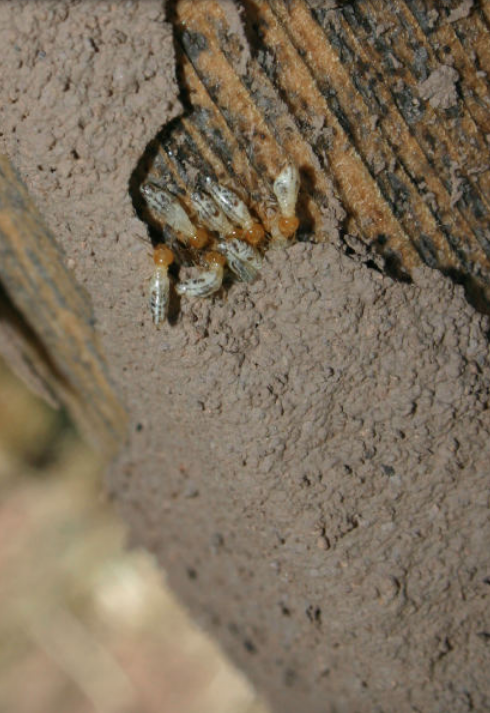
Subterranean termites construct protective tunnels made from soil and other materials.
These tubes may appear along foundation walls, piers, plumbing penetrations, or other surfaces connecting the soil with potential food sources.
A mud tube indicates termite activity at some point, but its appearance alone may not determine whether a colony remains active.
Damaged Wood
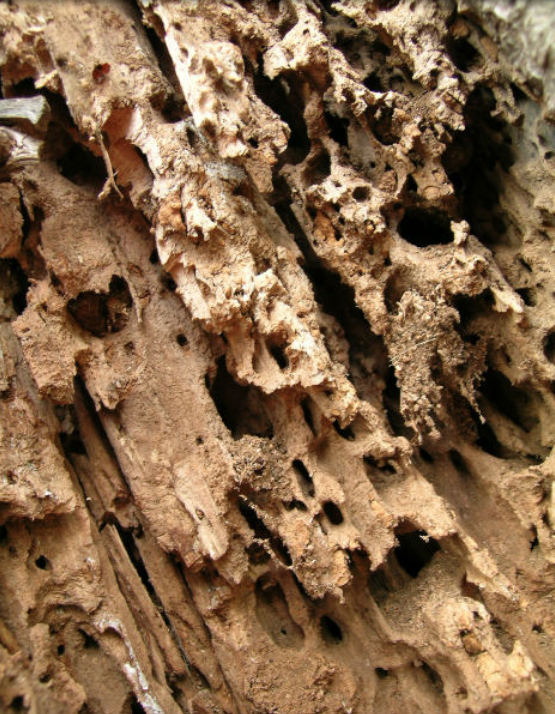
Termite feeding may weaken wood internally while leaving the outer surface largely intact.
Homeowners sometimes notice damaged trim, deteriorating door frames, or unusual changes in wooden flooring.
However, moisture damage and fungal decay can produce similar symptoms. An accurate diagnosis requires examining the affected material and surrounding conditions.
Moisture Problems
Leaks, trapped humidity, and persistent dampness can make parts of a structure more favorable to termites.
Raised homes, crawl spaces, slab foundations, and older buildings each have different inspection challenges.
For New Orleans properties, where water intrusion and moisture management may be continuing concerns, identifying these vulnerabilities is an important part of structural maintenance.
Why Termite Inspections Are More Than Visual Checks
A termite inspection should examine both signs of existing activity and conditions that could increase future risk.
Inspectors commonly evaluate accessible foundations, wood-to-soil connections, structural supports, plumbing penetrations, and areas affected by moisture.
They may also examine damaged wood and look for evidence of galleries, shelter tubes, or reproductive insects.
Inspection methods vary depending on building construction and accessibility. A raised home may provide access beneath structural framing, while a slab-on-grade property presents different limitations.
No ordinary visual inspection can guarantee the detection of every concealed termite colony.
Homeowners should therefore understand which areas were examined, what evidence was found, and whether additional investigation is recommended.
When comparing termite control in New Orleans, the quality of inspection and explanation is at least as important as the treatment product being proposed.
Liquid Treatments and Baiting Systems: How They Differ
Two established approaches to subterranean termite management are liquid soil treatments and termite bait systems.
Liquid termiticides are applied to create a treated zone around or beneath appropriate structural areas. Depending on the product and application, termites encountering the treatment may be controlled before they cause additional damage.
Bait systems rely on termites locating stations placed around a structure. Workers feed on the bait and can transfer its effects through the colony.
Both methods require correct installation and follow-up according to the specific product and treatment plan.
A property with complicated construction, previous modifications, inaccessible areas, or existing damage may need additional evaluation before a treatment method is selected.
Some circumstances may justify combining different approaches.
Homeowners should ask how a proposed treatment works, what areas it covers, how it will be monitored, and what conditions are excluded from any warranty.
Everyday Maintenance That Can Reduce Termite Risk
A professional termite management program does not eliminate the importance of ordinary property maintenance.
Several practical measures can make buildings less favorable to subterranean termites.
- Repair leaking pipes, faucets, roofs, and drainage systems.
- Avoid storing firewood or discarded lumber directly against exterior walls.
- Reduce unnecessary wood-to-soil contact.
- Keep foundation areas accessible for inspection.
- Avoid excessive mulch accumulation near the structure.
- Investigate persistent moisture or unexpected wood deterioration.
The LSU AgCenter also recommends paying attention to outdoor lighting during Formosan termite swarm season, because illuminated areas can attract reproductive insects.
Reducing lighting may limit the number of swarmers gathering around a home, but it should not be confused with colony control.
What About Termites in Newly Purchased Homes?
A property can look well-maintained while containing concealed termite damage or conditions favorable to infestation.
For this reason, buyers should consider a wood-destroying insect inspection as part of their due diligence, particularly in regions where termites are common.
It is useful to review any available records of previous termite treatments, inspections, repairs, and warranties.
A treatment agreement should be examined carefully because coverage may depend on inspections, renewals, structural conditions, and other contractual requirements.
Buyers should also distinguish between coverage for additional treatment and coverage for repair or replacement of damaged materials.
These are not necessarily the same benefit.
Protecting New Orleans Homes Beyond Swarm Season
Termite swarm season makes the insects highly visible, but structural protection requires attention throughout the year.
Colonies may continue feeding and developing when winged termites are no longer noticeable.
Routine maintenance, appropriate inspections, and a properly selected management system can help homeowners identify risk before extensive damage develops.
For property owners reviewing available options, J&J Exterminating provides information about its residential termite protection and monitoring systems, including liquid treatments and baiting programs.
The most useful time to investigate termite vulnerability is before visible damage creates an urgent and potentially expensive structural problem.