Common Mistakes When Installing Herringbone Floors
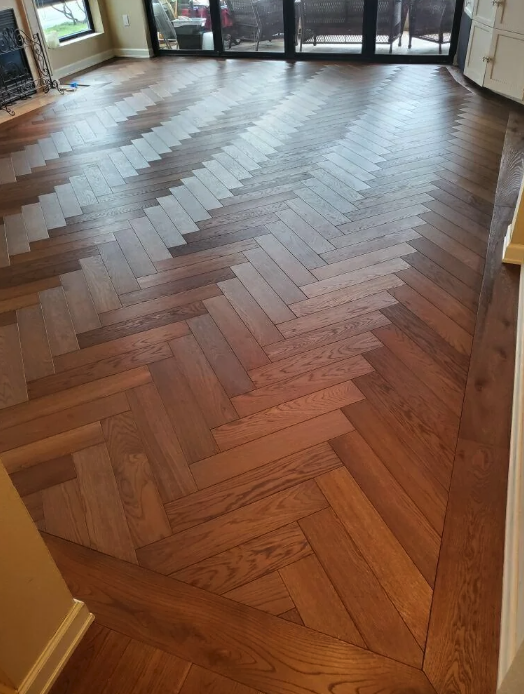
Herringbone flooring is one of the most visually striking choices you can make for a home or commercial space!
Its geometric pattern adds elegance, movement, and a sense of craftsmanship that standard plank layouts simply can’t match. However, achieving that refined look is not as simple as laying boards in a straight line.
Herringbone installation requires precision, planning, and technical understanding. Even small mistakes can disrupt the entire pattern and lead to costly corrections. Knowing what to avoid is just as important as knowing how to install it.
Why herringbone flooring is more complex than it looks
At first glance, herringbone may seem like a repetitive pattern, but in reality, it relies on exact alignment and consistent spacing throughout the entire surface.
Unlike standard flooring, where minor deviations might go unnoticed, herringbone amplifies every imperfection. A slight misalignment at the beginning can throw off the entire layout by the time you reach the opposite wall.
This is why preparation and accuracy are critical from the very first step.
Poor planning before installation begins
One of the most common mistakes is rushing into installation without proper planning. Herringbone floors require a clear layout strategy before any boards are placed.
This includes determining the starting point, ensuring the pattern is centred correctly, and accounting for room dimensions. Without this, the pattern may end up uneven or awkwardly cut at the edges.
The importance of setting a centre line
A properly marked centre line ensures that the pattern is symmetrical and visually balanced. Skipping this step often results in a floor that looks “off”, even if the installation itself is technically correct.
Inaccurate measurements and spacing
Precision is everything with herringbone flooring. Even small measurement errors can compound as the installation progresses.
Gaps that are slightly too wide or boards that are not perfectly aligned will disrupt the pattern and make the floor look inconsistent. Over time, these imperfections become more noticeable, especially in well-lit spaces.
Professionals take extra time to measure, adjust, and double-check each section to maintain uniformity across the entire floor.
Ignoring subfloor preparation
A perfectly installed herringbone pattern can still fail if the subfloor is not properly prepared. Uneven surfaces, moisture issues, or debris can all affect the final result.
If the base is not level, the pattern may shift or create visible irregularities. In some cases, it can even lead to long-term structural issues such as movement or gaps between boards.
Why preparation affects durability
Subfloor preparation is not just about appearance—it directly impacts how long the flooring will last. A stable, level base ensures that the pattern remains intact over time.
Choosing the wrong materials or adhesive
Not all wood types or adhesives are suitable for herringbone installation. Some materials expand more than others, while certain adhesives may not provide the required strength for this pattern.
Using the wrong combination can result in movement, lifting, or gaps appearing over time. This is especially important in environments with fluctuating temperature or humidity.
Underestimating the skill required
Herringbone flooring is often underestimated by those who are used to standard installations. However, the level of detail involved makes it a highly specialised task.
Every board must be placed with precision, and adjustments are often needed throughout the process. Without experience, it is easy to make errors that are difficult to correct later.
In many cases, working with experienced professionals such as FloorOx ensures that the pattern is installed correctly from the start, avoiding common pitfalls and achieving a clean, balanced finish.
Rushing the installation process
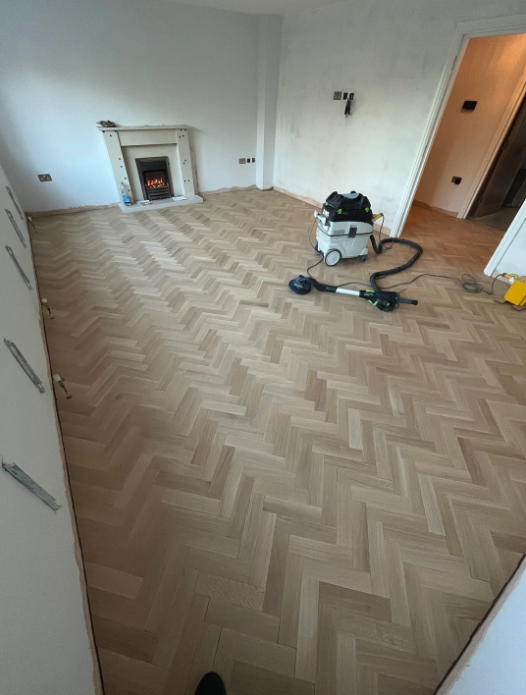
Time pressure is another factor that leads to mistakes. Herringbone flooring cannot be rushed without compromising quality.
Each section needs to be carefully aligned and secured before moving on. Skipping steps or working too quickly often results in visible inconsistencies that affect the overall appearance.
The long-term impact of installation mistakes
Mistakes in herringbone flooring are not just cosmetic. They can affect durability, stability, and even the value of the space.
A poorly installed floor may require repairs or even complete replacement, which can be significantly more expensive than doing it correctly the first time.
Getting it right from the start
Herringbone flooring is an investment in both style and craftsmanship. When installed properly, it can transform a space and last for decades.
Avoiding common mistakes—through careful planning, proper materials, and skilled installation—ensures that the final result lives up to expectations.
In the end, attention to detail is what separates an average installation from one that truly stands out.