Best Rugs for Formal Living Rooms: Elegant Styles, Materials & Designs
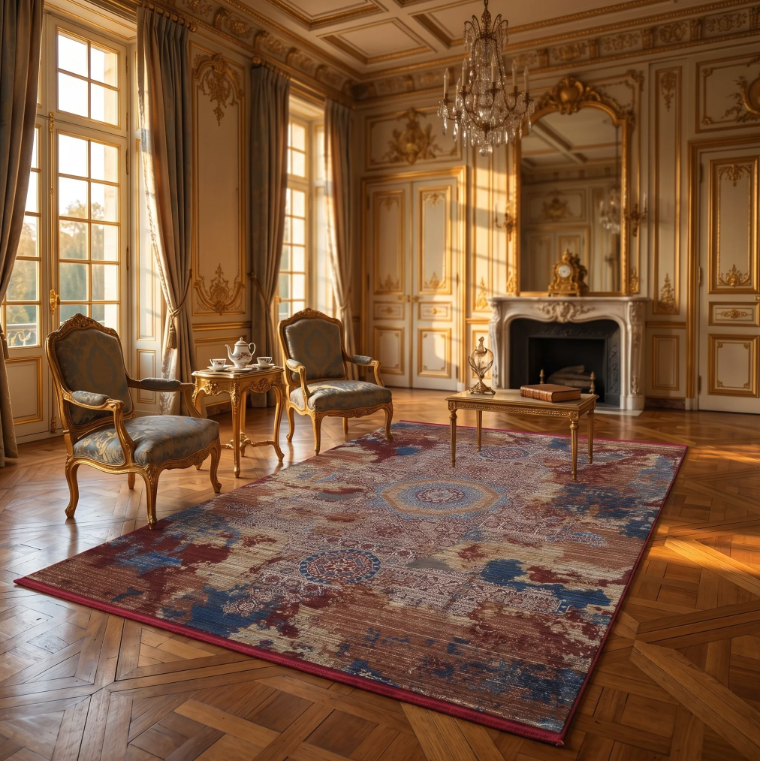
Choosing the right Living Room Rugs can completely change the appearance of a formal living space!
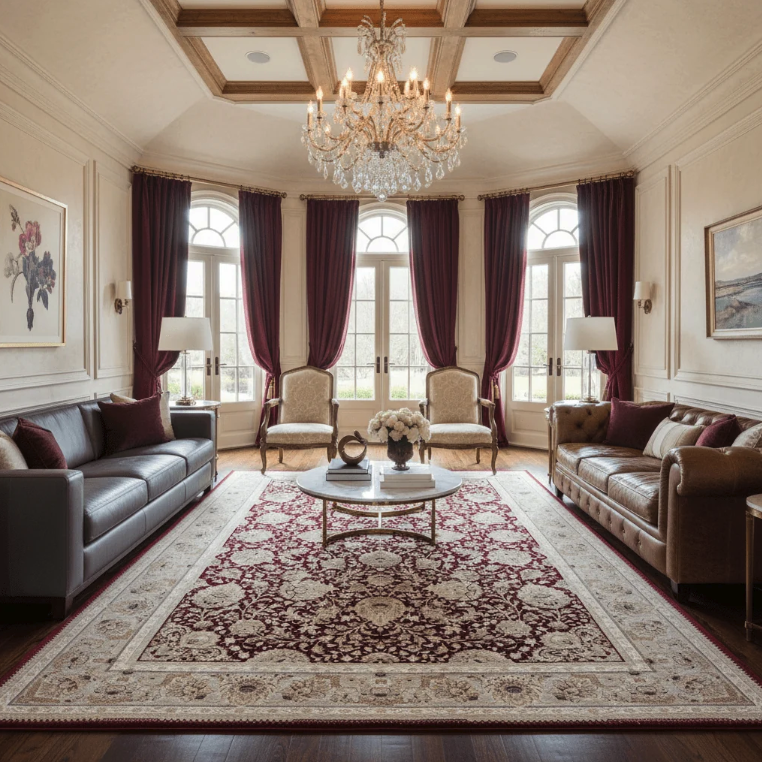
In a room designed for entertaining guests or creating a more sophisticated atmosphere, the rug should do more than simply cover the floor. It should define the seating area, complement the furniture, introduce warmth and help create a polished, well-balanced interior.
Among the many styles available, Persian Rugs remain one of the most popular choices for formal living rooms. Their intricate patterns, decorative borders, rich colours and timeless character make them particularly suitable for elegant interiors. Whether paired with classic furniture or used as a statement piece in a modern room, Persian-inspired designs can instantly add depth and refinement.
The best Living Room Rugs combine appearance, proportion, comfort and durability, while Persian Rugs are especially appealing for homeowners who want a rug with traditional character and a strong decorative presence. The right choice depends on your room size, furniture layout, colour scheme, material preference and the overall atmosphere you want to create.
This guide explains how to choose the best rugs for formal living rooms, including the most suitable styles, materials, colours and placement options.
What Makes a Rug Suitable for a Formal Living Room?
Formal living rooms are generally designed to feel more organised, refined and sophisticated than everyday family spaces.
The rug therefore needs to support the overall design rather than look casual or disconnected from the furniture.
Several factors can make a rug more suitable for a formal setting.
Elegant Design
Formal interiors usually benefit from rugs with well-balanced patterns, detailed borders or sophisticated colour combinations.
Traditional designs often work particularly well because they add character without making the room feel overly trendy.
Quality Appearance
Even when a rug is machine-made, the overall finish should look refined.
Clear patterns, balanced colours and a well-proportioned design can make a significant difference to the appearance of the room.
Appropriate Size
A rug that is too small can make even expensive furniture look disconnected.
Formal rooms generally look better when the rug is large enough to visually connect the main sofa, chairs and coffee table.
Refined Colour Palette
Rich colours such as burgundy, navy, deep red, cream, beige and dark green are commonly associated with traditional formal interiors.
Modern formal rooms may instead use softer neutral shades such as ivory, taupe, grey or muted blue.
Durability
A formal rug should not only look attractive on the day it is purchased.
It should maintain its appearance over time, particularly if the living room is frequently used for guests or family gatherings.
Why Persian Rugs Are Ideal for Formal Living Rooms
Persian Rugs have long been associated with elegant interiors.
Their appeal comes from a combination of detailed patterns, traditional motifs, rich colour palettes and symmetrical designs.
They can add a sense of history and character to a room that might otherwise feel too plain.
Timeless Patterns
Persian-style designs often feature floral motifs, medallions, decorative borders and detailed repeating patterns.
These elements naturally suit formal interiors because they create visual structure.
A central medallion can also work particularly well when positioned beneath a coffee table because it helps establish a clear focal point.
Rich and Sophisticated Colours
Traditional Persian-inspired rugs often use deep reds, blues, creams, greens and warm neutral tones.
These colours can make a living room feel warmer and more luxurious.
For example, a burgundy rug beneath a cream sofa can produce a strong contrast while maintaining an elegant appearance.
Strong Decorative Presence
One of the biggest advantages of a Persian-style rug is its ability to act as a statement piece.
In a living room with neutral walls and simple furniture, the rug can provide the colour, pattern and personality needed to complete the interior.
This makes Persian designs especially useful when you want the floor to become an important part of the overall décor.
Best Rug Styles for Formal Living Rooms
There is no single rug style that works for every formal living room.
Your choice should reflect the architecture of the room, the furniture and the overall decorative style.
Traditional Persian Rugs
Traditional Persian-inspired rugs are an excellent choice for classic formal interiors.
They often feature detailed floral patterns, decorative borders and central medallions.
These designs work especially well with:
- Carved wooden furniture
- Chesterfield-style sofas
- Antique furniture
- Traditional curtains
- Decorative chandeliers
- Warm wooden flooring
They can also be used in contemporary homes to create contrast between old and new styles.
Vintage and Distressed Persian Rugs
Vintage-style rugs offer a softer interpretation of traditional designs.
The colours are usually more muted, and the patterns may have a gently faded appearance.
This makes them particularly suitable for homeowners who appreciate Persian patterns but do not want the rug to dominate the entire room.
A distressed rug can work beautifully with modern sofas, wooden coffee tables and neutral walls.
Oriental-Style Rugs
Oriental-inspired designs can also suit formal interiors.
They often include detailed borders, repeating motifs and decorative patterns similar to traditional Persian designs.
These rugs are ideal when you want a sophisticated appearance without relying on an extremely bold colour palette.
Neutral Luxury Rugs
Not every formal room needs a highly patterned rug.
In contemporary interiors, neutral rugs in cream, beige, grey or ivory can create a more understated sense of luxury.
These rugs work particularly well when the furniture, wall panelling or artwork already provides enough decorative detail.
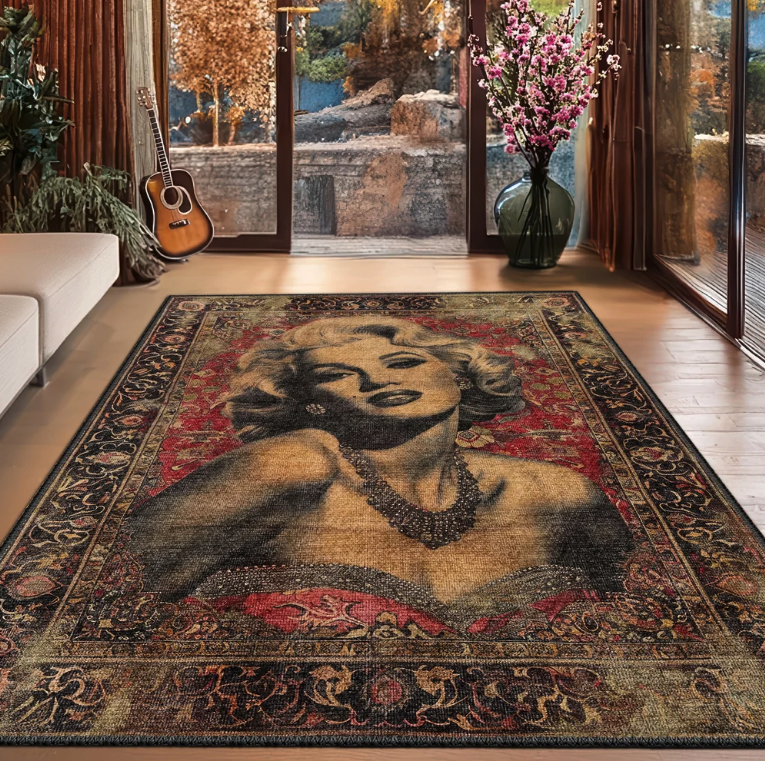
Large Patterned Rugs
Large patterned rugs are particularly effective in spacious formal living rooms.
They help fill the floor area and visually connect multiple seating pieces.
A large rug can also make a room feel more complete and intentional.
How to Choose the Right Rug Size for a Formal Living Room
Size is one of the most important considerations when buying a formal living room rug.
A beautiful design can lose much of its impact if the rug is too small for the furniture arrangement.
Small Formal Living Rooms
In smaller rooms, the rug may sit partially beneath the sofa or directly in front of it.
The key is to ensure the rug is wide enough to relate visually to the furniture.
A rug that is much narrower than the sofa may look out of proportion.
Medium Formal Living Rooms
For medium-sized rooms, one of the most effective layouts is placing the front legs of the sofa and chairs on the rug.
This connects the furniture while keeping the layout open and practical.
Large Formal Living Rooms
Large formal spaces often look best when all the main furniture sits completely on the rug.
This creates a clearly defined seating zone and gives the room a more luxurious appearance.
The rug should extend beyond the furniture rather than ending directly underneath it.
Best Materials for Formal Living Room Rugs
Material affects both the appearance and performance of a rug.
When selecting a rug for a formal room, consider softness, durability, maintenance and how frequently the room will be used.
Wool Rugs
Wool is one of the most traditional materials used in quality rugs.
It is valued for its softness, warmth and durability.
A wool rug can be an excellent choice for a formal living room because it feels substantial underfoot and generally provides a premium appearance.
Wool Blend Rugs
Wool blend rugs combine wool with other fibres.
They can offer a balance between comfort, durability and practical maintenance.
Depending on the construction, they may also be more affordable than pure wool options.
Viscose Rugs
Viscose can create a soft surface with a subtle sheen.
This makes it particularly attractive in decorative rooms where appearance is a major priority.
However, viscose rugs can require more careful maintenance, so always check the manufacturer’s cleaning recommendations.
High-Quality Synthetic Rugs
Synthetic materials can be a practical option for formal rooms that are used frequently.
Modern synthetic rugs can reproduce detailed traditional patterns while remaining easier to maintain.
They may be particularly useful in homes where durability and everyday practicality are important.
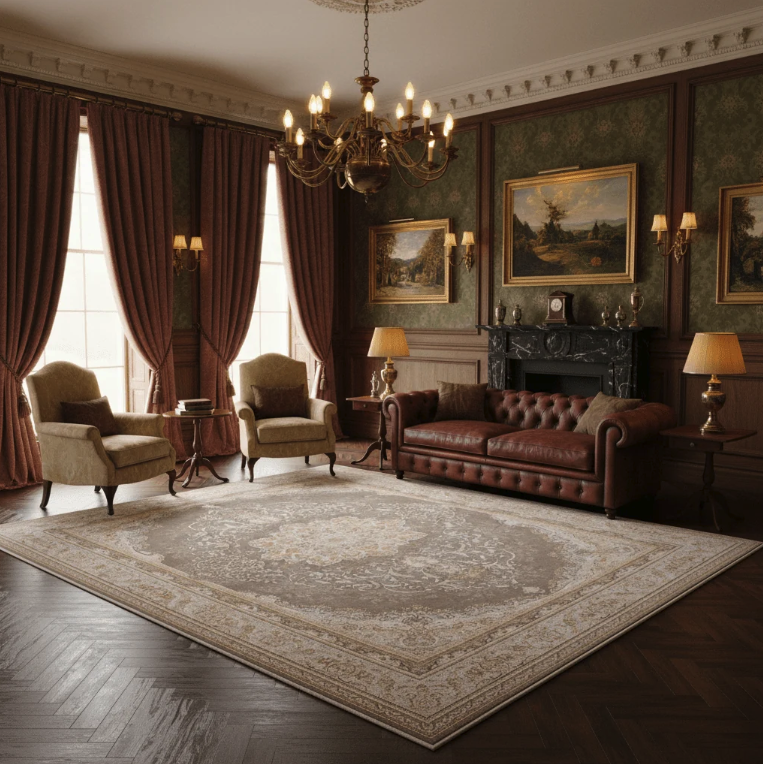
Best Colours for Formal Living Room Rugs
Colour can influence the entire mood of a formal living room.
The best choice depends on your furniture, flooring, wall colour and the amount of natural light in the room.
Red and Burgundy
Deep red and burgundy rugs are closely associated with traditional luxury interiors.
They work particularly well with:
- Cream sofas
- Dark wooden furniture
- Gold accessories
- Beige walls
- Traditional decorative pieces
These colours can make the room feel warmer and more intimate.
Navy and Dark Blue
Navy creates a refined and sophisticated appearance.
It can work beautifully with grey, cream or beige furniture.
Dark blue Persian-inspired designs are also useful when you want a traditional rug without relying on strong red tones.
Cream and Beige
Cream and beige rugs can brighten formal living spaces.
They work well in rooms with darker furniture or limited natural light.
A light rug can also make a medium-sized room appear more spacious.
Grey and Neutral Tones
Grey, taupe and soft neutral shades are particularly suitable for modern formal interiors.
They allow the furniture and architectural details to remain the main focus.
Gold and Warm Tones
Warm gold, caramel and earthy tones can add richness without appearing excessively dark.
They are particularly effective in rooms with wooden furniture or warm lighting.
How to Match a Formal Rug with Your Sofa
The sofa and rug are usually the two largest visual elements in a living room.
They should complement one another without looking overly matched.
Beige Sofa
A beige sofa works with a wide range of rug colours.
Consider burgundy, navy, traditional red, dark green or a multi-coloured Persian pattern.
Grey Sofa
Grey furniture can sometimes make a room feel cool.
A richly coloured rug can introduce warmth and character.
Navy, burgundy, red and cream can all work well depending on the shade of grey.
Cream Sofa
Cream furniture provides an excellent neutral background for detailed Persian-style rugs.
Deep reds, blues and multi-coloured patterns can create an elegant contrast.
Dark Sofa
A dark brown, charcoal or black sofa can be balanced with a lighter rug.
Cream, beige or muted Persian-inspired designs can prevent the room from looking too heavy.
Colourful Sofa
If the sofa already has a strong colour or pattern, choose a rug with a more restrained design.
Too many competing patterns can make a formal room feel visually cluttered.
Patterned vs Plain Rugs for Formal Living Rooms
Both patterned and plain rugs can work in a formal setting.
The best choice depends on the rest of the décor.
When to Choose a Patterned Rug
A patterned rug is ideal when:
- The sofa is plain
- Walls are neutral
- Curtains are simple
- The room needs a focal point
- The interior feels visually empty
Persian Rugs are particularly effective in this situation because their detailed designs add character immediately.
When to Choose a Plain or Subtle Rug
Choose a simpler rug when:
- The sofa contains patterns
- Curtains are highly decorative
- The walls feature detailed wallpaper
- The room contains large artwork
- Decorative accessories already provide strong colour
A formal room should feel coordinated rather than overloaded.
How to Position a Rug in a Formal Living Room
Rug placement can be just as important as the design itself.
The goal is to visually connect the seating arrangement.
All Furniture on the Rug
This is one of the most luxurious layouts.
The sofa, armchairs and coffee table are all positioned completely on the rug.
It works best in large living rooms with enough floor space.
Front Legs on the Rug
This is a practical and elegant solution for medium-sized rooms.
The front legs of the sofa and chairs sit on the rug while the rear legs remain on the flooring.
It creates a connected seating arrangement without requiring an extremely large rug.
Rug Around the Coffee Table
In smaller rooms, a rug can be centred beneath the coffee table with furniture positioned around it.
For a formal appearance, make sure the rug is still large enough to relate to the sofa and chairs.
Traditional vs Modern Formal Living Room Rugs
Formal interiors do not always need to look traditional.
Both classic and contemporary rugs can create an elegant atmosphere.
| Feature | Traditional Formal Rug | Modern Formal Rug |
| Pattern | Detailed and decorative | Minimal or subtle |
| Colours | Rich and deep | Neutral or muted |
| Typical Style | Persian-inspired | Contemporary |
| Best With | Classic furniture | Modern furniture |
| Visual Impact | Strong focal point | Refined background |
| Overall Feel | Timeless and luxurious | Clean and sophisticated |
Traditional Persian Rugs are ideal when you want colour, pattern and character.
Modern neutral rugs are better when you prefer clean lines and understated elegance.
How to Choose Between Persian Rugs and Modern Rugs
The decision between a Persian-style rug and a modern design should depend on the overall direction of the room.
Choose a Persian rug if you want:
- A strong focal point
- Detailed patterns
- Traditional character
- Rich colours
- A timeless appearance
- Visual warmth
Choose a modern rug if you want:
- Clean lines
- Minimal patterns
- Neutral colours
- A contemporary appearance
- A subtle background for furniture
You can also combine the two approaches.
A Persian-inspired rug can look extremely effective in a modern living room because the contrast between traditional pattern and contemporary furniture creates visual interest.
Common Mistakes to Avoid When Choosing Formal Living Room Rugs
Even an attractive rug can look wrong if it is chosen without considering the room as a whole.
Choosing a Rug That Is Too Small
This is one of the most common mistakes.
A small rug can make the seating arrangement look fragmented.
When possible, choose a size that connects the sofa and surrounding chairs.
Choosing Style Without Considering the Room
A rug should not be selected in isolation.
Think about the sofa, flooring, curtains, walls and lighting before deciding.
Using Too Many Patterns
Persian Rugs can contain detailed patterns.
If you choose a highly decorative rug, allow it to become one of the main features of the room.
Avoid combining it with too many competing patterns.
Ignoring Durability
A formal room may still receive significant foot traffic.
Choose a material suitable for the way the room will actually be used.
Forgetting to Measure
Always measure the space before buying.
Visual estimates can be misleading, particularly when shopping online.
Following Trends Too Closely
Formal interiors often benefit from timeless choices.
A rug that works with your furniture and personal style is usually a better long-term investment than one chosen purely because it is fashionable.
How to Care for a Formal Living Room Rug
Proper maintenance can help preserve the appearance of your rug.
Vacuum regularly to remove dust and loose debris, following the manufacturer’s instructions for the material.
Rotate the rug occasionally to encourage more even wear.
This is particularly useful if one section receives more foot traffic or sunlight than another.
If spills occur, deal with them promptly.
Blot rather than aggressively rubbing the affected area, as rubbing can spread the stain or damage the fibres.
For delicate materials or valuable rugs, professional cleaning may be the safest option.
A suitable rug underlay can also help keep the rug in position and reduce unnecessary movement.
Creating a Luxury Look with Living Room Rugs
A formal room does not need expensive furniture in every corner to feel luxurious.
Correct proportions and careful coordination can make a significant difference.
Start with a rug large enough to anchor the furniture.
Choose colours that complement the room rather than compete with it.
Use a patterned rug as the main decorative feature if the furniture is relatively simple.
If the furniture is already elaborate, use a more restrained rug to create balance.
High-quality Living Room Rugs can bring together separate pieces of furniture and make the space feel carefully designed rather than simply furnished.
Are Persian Rugs Suitable for Modern Formal Living Rooms?
Yes.
One of the strongest current interior approaches is combining traditional decorative elements with modern furniture.
For example, a detailed Persian-style rug can sit beneath a simple cream or grey sofa.
The contrast allows the rug to provide warmth and personality while the modern furniture keeps the room feeling fresh.
This approach is particularly effective when the rug contains colours that are subtly repeated in cushions, artwork or other accessories.
You do not need to create a completely traditional room to enjoy the elegance of Persian Rugs.
Final Thoughts: Choosing the Best Rug for a Formal Living Room
The best rug for a formal living room should combine elegance, proportion, quality and practicality.
Start by measuring your room carefully and considering how the furniture is arranged.
Then decide whether you want the rug to become a statement feature or act as a quieter background element.
Traditional Living Room Rugs with intricate patterns are ideal when you want to add warmth and decorative character, while neutral designs can create a cleaner and more contemporary appearance.
For homeowners looking for timeless elegance, Persian Rugs remain an excellent choice. Their detailed patterns, rich colours and traditional character can transform a simple seating area into a sophisticated formal space.
Ultimately, the right rug is one that complements your furniture, suits your lifestyle and helps create the atmosphere you want your guests to experience.
Frequently Asked Questions
What type of rug is best for a formal living room?
A rug with an elegant design, appropriate size and quality finish is usually best for a formal living room. Persian-inspired rugs, wool rugs and sophisticated neutral rugs are all popular options depending on the interior style.
Are Persian Rugs good for formal living rooms?
Yes. Persian Rugs are particularly suitable for formal spaces because their detailed patterns, rich colours and decorative borders create a refined and timeless appearance.
What colour rug looks most luxurious?
Burgundy, navy, cream, beige, deep red and rich neutral tones can all create a luxurious appearance. The best colour depends on your furniture and overall room palette.
What size rug should I choose for a formal living room?
The rug should generally be large enough to connect the main seating furniture. In medium rooms, the front legs of the sofa and chairs can sit on the rug. In larger rooms, all the furniture can be positioned on it.
Should a formal living room rug go under the sofa?
Yes, in many formal interiors the rug should extend partially or fully beneath the sofa. This helps connect the furniture and creates a more cohesive seating area.
Are patterned rugs suitable for formal interiors?
Yes. Detailed patterns can add character and sophistication, particularly when the rest of the furniture is relatively simple. Persian-style designs are especially well suited to formal interiors.
What material is best for luxury Living Room Rugs?
Wool is often considered an excellent option because of its softness, durability and premium appearance. Wool blends, viscose and quality synthetic materials can also work well depending on the required level of maintenance.
Should a formal rug be lighter or darker than the sofa?
There is no strict rule. A light rug can create contrast with a dark sofa, while a darker or richly coloured rug can add depth beneath cream, beige or grey furniture. The overall balance of the room matters more than simply choosing a lighter or darker shade.