Moving With Pets: How to Keep Dogs and Cats Safe Before, During, and After a Move
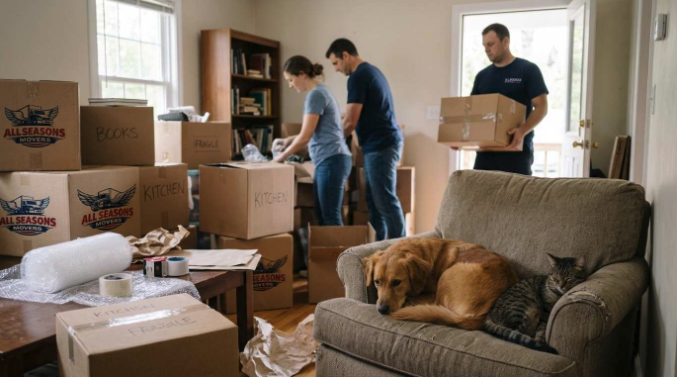
Moving to a new home can be an exciting experience for the entire family. There are new rooms to decorate, furniture to arrange, and unfamiliar places to explore. But if you have a dog or cat, there is another family member whose needs deserve special attention!
Unlike people, pets do not understand why their familiar surroundings suddenly start disappearing. Their favorite chair is moved, their sleeping area becomes filled with boxes, and unfamiliar people begin walking through the house. Even the most relaxed animal can become anxious when its daily routine changes unexpectedly.
The challenge does not end when the moving truck reaches the new property. Strange smells, unfamiliar noises, and different surroundings can make the adjustment difficult for pets during the first few days or even weeks.
Fortunately, a little preparation can make the experience considerably easier.
Whether you are moving across town or relocating to another state, here are practical ways to protect your pets, reduce unnecessary stress, and help them settle comfortably into their new home.
1. Start Preparing Your Pets Several Weeks Before Moving
One of the biggest mistakes pet owners make is waiting until moving week to think about their animals’ needs.
Pets rely heavily on familiar routines. Sudden changes to feeding times, sleeping arrangements, and daily activities can make an already stressful situation worse.
Start preparing at least two to four weeks before your moving date, if possible.
Begin by identifying everything your pet regularly uses.
This might include:
- Food and water bowls.
- Beds and blankets.
- Favorite toys.
- Leashes and harnesses.
- Litter boxes and litter supplies.
- Grooming equipment.
- Medication and veterinary records.
- Carriers and travel accessories.
Keep these belongings together rather than packing them with ordinary household items.
You should also maintain regular feeding, walking, and play schedules. Even when the house is becoming increasingly disorganized, familiar routines can provide a sense of stability.
If your pet has never traveled in a carrier, introduce it gradually. Leave the carrier open in a familiar room, place comfortable bedding inside, and encourage your pet to explore it voluntarily.
For dogs, short practice trips in the vehicle can help them become more comfortable with transportation.
The goal is to make the carrier and vehicle feel familiar before moving day arrives.
2. Visit Your Veterinarian Before Relocating
A move can involve more than simply transporting an animal from one address to another.
Depending on the distance and destination, you may need updated veterinary records, vaccination information, health certificates, or other documentation.
Schedule a veterinary appointment before your move, particularly if you are relocating across state lines or internationally.
Ask your veterinarian about:
- Your pet’s current vaccination status.
- Any ongoing medication requirements.
- Copies of medical and vaccination records.
- Microchip registration and contact information.
- Travel-related health concerns.
- Any special requirements for your destination.
If your pet experiences significant travel anxiety or motion sickness, discuss this with the veterinarian before moving day.
Never give your pet human medication or sedatives without professional veterinary guidance. Some medications that are safe for people can be dangerous for animals.
It is also worth researching veterinary clinics near your new home before arriving.
Having the contact details of a nearby clinic can provide peace of mind, especially when your pet has an existing medical condition.
3. Create a Safe Room While Your Home Is Being Packed
Moving day can be chaotic.
Doors are opening and closing, furniture is being carried outside, and people are moving between rooms with boxes and equipment.
This creates several risks for animals.
A frightened dog might run through an open doorway, while a curious cat may hide inside an unpacked box or underneath furniture.
One of the easiest ways to reduce these risks is to create a dedicated safe room.
Choose a quiet room that will remain undisturbed while the rest of the property is being packed.
Place your pet’s familiar bedding, water bowl, food, toys, and other essentials inside.
For cats, include a clean litter box with easy access. For dogs, make sure they have a comfortable place to rest and enough space to move around.
Close the door and place a visible sign outside so everyone involved knows that an animal is inside.
If possible, arrange for a trusted family member or pet sitter to supervise your pet.
Avoid placing the animal in an area where heavy furniture is being moved or where loud equipment is being used.
The objective is to keep your pet away from the busiest parts of the house until transportation is ready.
4. Keep Your Pet’s Essential Supplies Separate
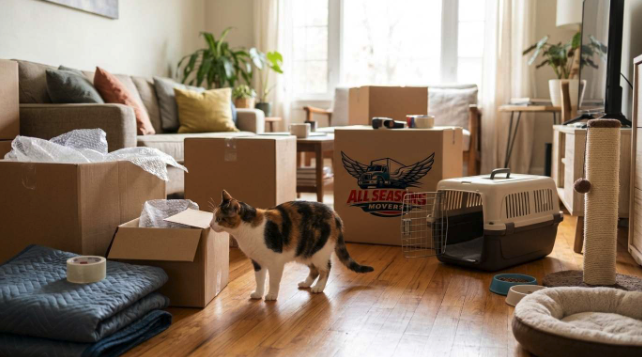
Imagine reaching your new home after a long journey and discovering that your pet’s food, medication, or favorite blanket is buried inside several unopened boxes.
It is an avoidable problem, but one that happens surprisingly often.
Prepare a separate pet essentials bag that stays accessible throughout the move.
Include:
- Enough food for several days.
- Drinking water and a portable bowl.
- Any prescribed medication.
- Leash, harness, and identification.
- Waste bags or litter supplies.
- Cleaning materials for accidents.
- Familiar bedding or a blanket.
- Favorite toys and treats.
- Copies of important veterinary records.
If your pet follows a particular feeding schedule, bring enough food to maintain it.
Avoid changing food brands immediately before or after the move unless necessary. A sudden dietary change can cause digestive problems, adding another challenge during an already unfamiliar experience.
Keeping essential supplies together means you will not have to search through moving boxes whenever your pet needs something.
5. Make Transportation as Comfortable and Safe as Possible
The journey itself can be one of the most challenging parts of relocating with pets.
Dogs and cats may respond differently to unfamiliar vehicles, changing temperatures, traffic noise, and long periods of travel.
For cats and smaller dogs, use an appropriately sized, well-ventilated carrier that allows the animal to stand, turn around, and lie down comfortably.
Secure the carrier so it cannot slide around during transportation.
For larger dogs, use a suitable vehicle restraint system, travel crate, or other properly secured arrangement designed for pet transportation.
Never allow an animal to travel loose in the vehicle.
A few additional precautions can make the journey safer:
Maintain comfortable temperatures: Never leave pets unattended in a parked vehicle, especially in hot or cold weather.
Plan appropriate breaks: Dogs may need regular opportunities to stretch, drink water, and relieve themselves during longer journeys.
Keep identification accessible: Make sure your pet wears appropriate identification and that its microchip registration information is current.
Avoid unnecessary feeding immediately before travel: If your pet experiences motion sickness, ask your veterinarian about an appropriate feeding schedule.
Keep windows secure: Even calm animals may react unexpectedly to unfamiliar sounds or smells.
If you are traveling a considerable distance, plan your route around suitable rest stops and pet-friendly accommodation where necessary.
For air travel or international relocation, check the airline’s animal transportation policies and destination requirements well in advance.
6. Coordinate Moving Day So Your Pet Stays Away From the Activity
A household relocation involves several moving parts.
Furniture needs to be dismantled, boxes need to be loaded, and belongings must be transported without unnecessary delays.
When pets are involved, coordinating the schedule becomes even more important.
Before moving day, establish a clear plan for when your pet will leave the property.
Ideally, arrange for your dog or cat to stay with a trusted friend, family member, or professional pet sitter while the busiest moving activities take place.
If that is not possible, keep the animal in its designated safe room until the household is ready to leave.
It is also helpful to plan the order in which belongings will be transported.
For example, essential pet supplies should remain accessible rather than being loaded underneath furniture or large boxes.
When organizing household relocation arrangements, account for the time needed to secure your pet, prepare the vehicle, and coordinate the transportation of household belongings.
A little scheduling can prevent unnecessary confusion when everyone is trying to leave at the same time.
7. Prepare Your New Home Before Letting Your Pet Explore
Arriving at a new property does not mean your pet should immediately have access to every room.
Before allowing an animal to explore, inspect the home for potential hazards.
Check:
- Windows and balcony access.
- Loose electrical cables.
- Cleaning products and chemicals.
- Small objects that could be swallowed.
- Gaps behind appliances.
- Open staircases and unfamiliar entrances.
- Unsecured doors and gates.
- Toxic plants or other hazardous materials.
If the property has a garden, check that fencing and gates are secure before allowing your dog outside.
For cats, pay particular attention to windows, balconies, and possible escape routes.
Also consider the previous occupants’ belongings. A garage, storage area, or garden shed may contain chemicals, tools, or substances that are unsafe for animals.
Clean the areas your pet will use before introducing them to the property.
Once the home is reasonably safe, prepare one quiet room with familiar bedding, water, food, and other essentials.
This room will serve as your pet’s temporary base while the rest of the household is being organized.
8. Help Your Pet Adjust to the New Environment Gradually
One of the most common mistakes after moving is allowing pets to explore the entire property immediately.
While some confident dogs may adapt quickly, many animals need more time.
Cats, in particular, can become overwhelmed by unfamiliar smells, sounds, and large spaces.
Start by allowing your pet to become comfortable in one designated room.
Keep familiar belongings in place and maintain normal feeding and sleeping routines.
For cats, gradually introduce additional rooms once they appear relaxed and comfortable.
For dogs, take them on short walks around the new neighborhood, allowing time to investigate unfamiliar surroundings without becoming overwhelmed.
Avoid introducing too many new experiences at once.
For example, the first few days may not be the best time to invite several visitors into the home or introduce your pet to multiple unfamiliar animals.
Pay attention to changes in behavior.
Reduced appetite, hiding, excessive vocalization, unusual aggression, or changes in bathroom habits may indicate stress or an underlying health issue.
If concerning symptoms persist or your pet appears unwell, contact a veterinarian.
Patience is important. Every animal adjusts at a different pace.
9. Rebuild Familiar Routines in the New Home
Animals often feel more secure when their daily routines remain predictable.
Even though the surroundings have changed, try to maintain the same feeding, walking, playtime, and bedtime schedules.
If your dog previously enjoyed a morning walk, continue providing that opportunity around the new neighborhood.
If your cat had a regular feeding location, establish a similar arrangement in the new property.
You should also keep familiar bedding and toys available.
These objects carry recognizable scents that can help pets feel more comfortable.
Avoid changing several things at once.
For example, do not immediately introduce a new food brand, a different sleeping arrangement, and an unfamiliar feeding schedule.
Give your pet time to settle before making additional adjustments.
If you have moved into a property with more outdoor space, introduce your pet to it gradually and supervise the first visits.
A familiar routine can make an unfamiliar home feel much more predictable.
10. Be Patient During the First Few Weeks
Some pets appear comfortable within hours of arriving at a new home. Others need considerably longer.
A dog might spend the first few days investigating every corner, while a cat may prefer to remain hidden until the environment feels safe.
Neither response necessarily indicates a problem.
Give your pet time to adjust without forcing interactions or exploration.
Keep household noise manageable, maintain familiar routines, and provide opportunities for rest.
If you have children, explain that pets may need extra space during the adjustment period.
Avoid allowing visitors to overwhelm an animal that is still becoming familiar with its surroundings.
Remember that behavioral changes can sometimes indicate medical issues rather than relocation stress alone. Seek veterinary advice if symptoms are severe, persistent, or concerning.
The goal is to help your pet develop a sense of security in the new environment rather than expecting an immediate return to normal behavior.
Frequently Asked Questions About Moving With Pets
How early should I prepare my pet for a move?
Ideally, begin preparing two to four weeks before moving day. Introduce carriers, maintain familiar routines, organize veterinary records, and gradually prepare your pet for transportation.
Should I keep my cat in one room after moving?
Yes. Starting with one quiet, secure room can help your cat become comfortable with unfamiliar surroundings. Gradually introduce additional rooms as your cat becomes more relaxed.
How can I stop my dog from becoming anxious during a move?
Maintain familiar routines, provide a comfortable resting area, use familiar bedding and toys, and arrange suitable transportation. If your dog experiences severe anxiety, consult a veterinarian before moving.
Should pets travel in the moving truck?
No. Pets should travel in an appropriate passenger vehicle or through a suitable professional animal transportation arrangement. They should never be placed in the household moving truck with furniture and boxes.
How long does it take pets to adjust to a new home?
It varies considerably. Some pets settle within a few days, while others need several weeks or longer. Their age, temperament, previous experiences, and the complexity of the move can all influence the adjustment period.
Final Thoughts
Moving with pets requires more planning than a typical household relocation, but it does not have to become an overwhelming experience.
Start preparing early, keep essential supplies accessible, arrange safe transportation, and give your animals a quiet space away from moving-day activity.
Once you arrive, inspect the property, introduce familiar belongings, and allow your pet to explore gradually.
Most importantly, remember that your pet is adjusting to a completely unfamiliar environment. A little patience, consistency, and reassurance can make a meaningful difference.
A successful move is not just about getting furniture and boxes into the new property. It is about helping every member of the household, including the four-legged ones, feel safe and comfortable in their new home.